3 min readWomen's Training & Hormones
Training in the luteal phase: exactly what to change
The two weeks before your period are when training often feels hardest. Here is what actually shifts in the luteal phase — and the specific, practical adjustments that keep you progressing instead of fighting your physiology.
Part 2 of 8This article is part of the Women's Training & Hormones guideIf there is one stretch of the month where training reliably feels harder, it is the luteal phase — the roughly two weeks between ovulation and your period. Sessions that felt easy last week suddenly grind; sleep is patchier, motivation dips, and the scale jumps for no dietary reason. None of this is in your head, and none of it means backing off entirely. It means adjusting. Here is exactly what to change. (For the whole-cycle overview, see our guide to training with your cycle.)
What actually shifts in the luteal phase
After ovulation, progesterone rises and oestrogen stays elevated then falls late in the phase. Progesterone nudges your core body temperature up by around 0.3 to 0.5°C, which makes training in heat feel harder and can disrupt sleep. It also increases protein breakdown and shifts fuel use, and in the late luteal phase — the premenstrual days — many women notice higher perceived effort, water retention, disrupted sleep and lower motivation. The follicular phase after your period tends to be the mirror image: easier recovery and a greater appetite for intensity.
Change 1: keep lifting, but autoregulate the load
Do not abandon resistance training — the evidence does not support blanket deloading across the luteal phase, and consistency matters more than perfect timing. Instead, autoregulate: train by how you feel rather than by a fixed number. Use RPE or reps-in-reserve to guide load, take an extra warm-up set, and accept that a top set which flew up in the follicular phase might need to come down 5 to 10% in the late luteal phase. That is not regression — it is training the body you have this week.
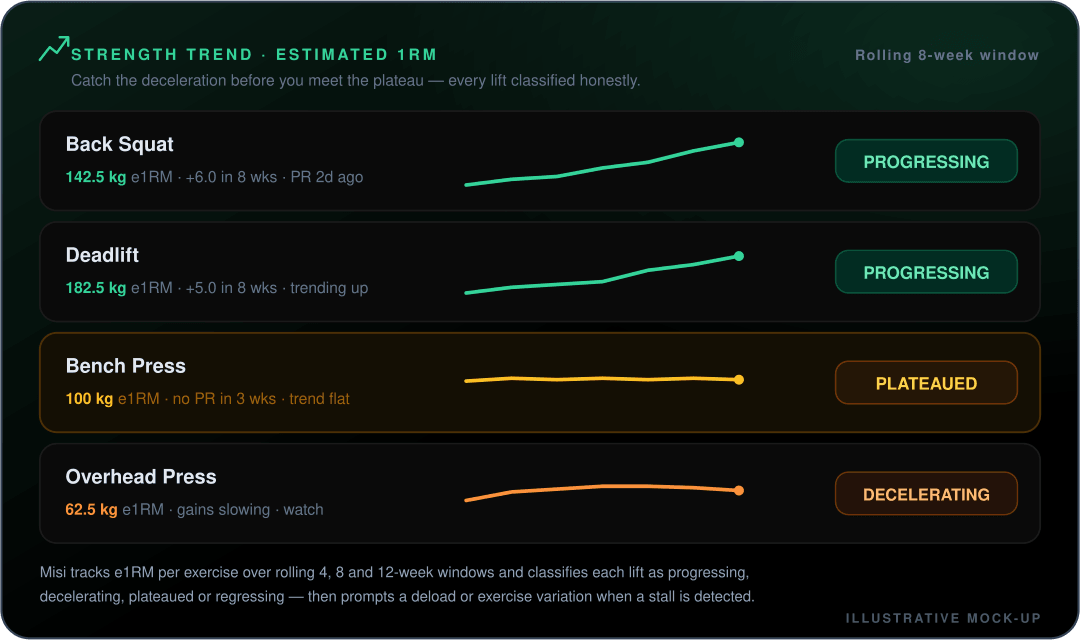
Change 2: swap some intensity for zone 2 in the late luteal days
Because core temperature is up and sleep is often worse, high-intensity intervals feel disproportionately brutal premenstrually and recovery is slower. A practical swap is to move a HIIT session to easier zone-2 work in the last few premenstrual days, keeping the aerobic stimulus without the recovery cost. You are redistributing intensity across the month, not removing it — the follicular phase is where you spend it back.
Change 3: manage heat, protein and iron
Three supporting moves matter here. Train in cooler conditions and hydrate well, because the raised body temperature makes heat feel worse. Nudge protein up slightly, since progesterone increases protein breakdown. And with your period approaching, keep iron-rich food in view — heavy bleeding is a common cause of the depletion that quietly flattens the following weeks. Small adjustments, but they add up over a cycle.
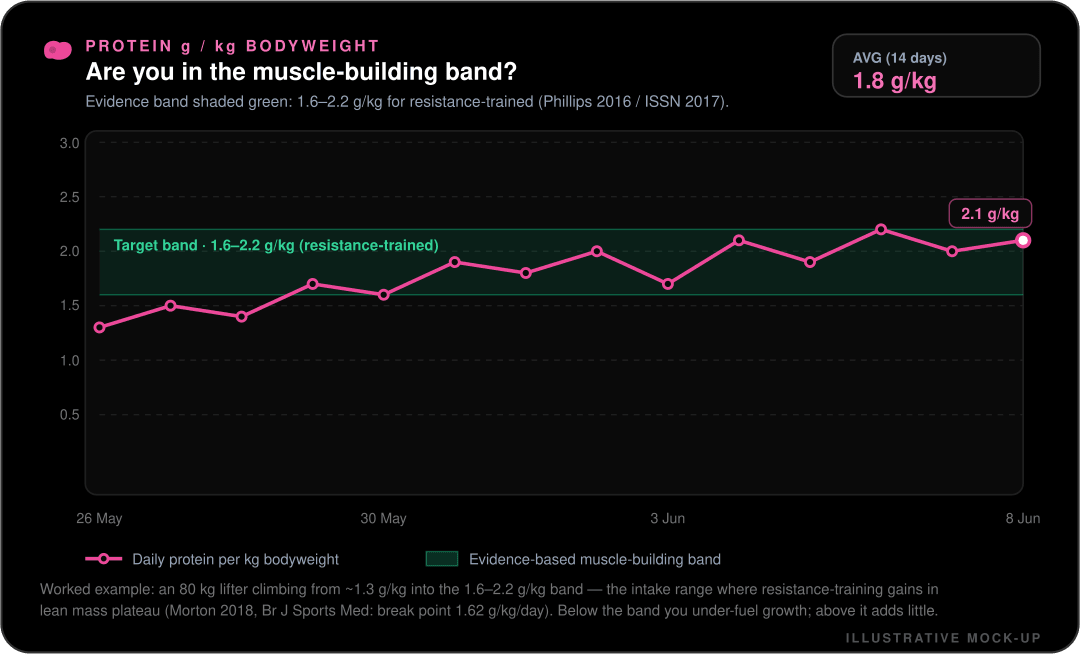
How Misi adapts through the phase
Misi predicts where you are in your cycle and offers phase-aware nudges rather than rigid rules: leaning toward intensity in the follicular phase, protecting recovery in the late luteal phase by suggesting a zone-2 swap, holding protein toward the upper band, and flagging iron as your period approaches. You stay in control — the app simply makes the smart adjustment easy to see and accept, so an "off" week becomes a managed one.
The luteal phase is not a write-off — it is a week to train smarter. Autoregulate the load, spend your intensity in the follicular phase, and stop fighting a body that is temporarily playing by different rules.
This is general fitness information, not medical advice. Cycle responses vary widely between individuals; for very disruptive premenstrual symptoms, irregular cycles or symptoms that concern you, speak to a clinician.
Ready to put this into practice?
Misi BioLabs turns your bloods into a meal plan, training block and AI coaching — in one place.
Start freeFree tools
- PhenoAge Calculator — Biological age from a standard blood panel (Levine 2018).
- Biological Age Calculator — How fast are you really ageing? Nine blood markers answer it — no quiz.
- VO2max Calculator — Cooper 12-minute test → VO2max + fitness age + mortality hazard.