3 min readGLP-1 & Muscle Preservation
GLP-1 and your blood panel: what improves, what to monitor
GLP-1 medications move far more than the number on the scale. Here is which blood markers should improve, which ones you need to keep an eye on, and how Misi reads the panel in context.
Part 4 of 12This article is part of the GLP-1 & Muscle Preservation guideMost people on a GLP-1 watch their weight and little else. But the same physiology that shrinks your appetite is quietly reshaping your blood chemistry — much of it for the better, some of it in ways worth monitoring. Your lab panel is the highest-resolution view you have of whether the drug is doing what it should, and it deserves more attention than the bathroom scale.
What should improve
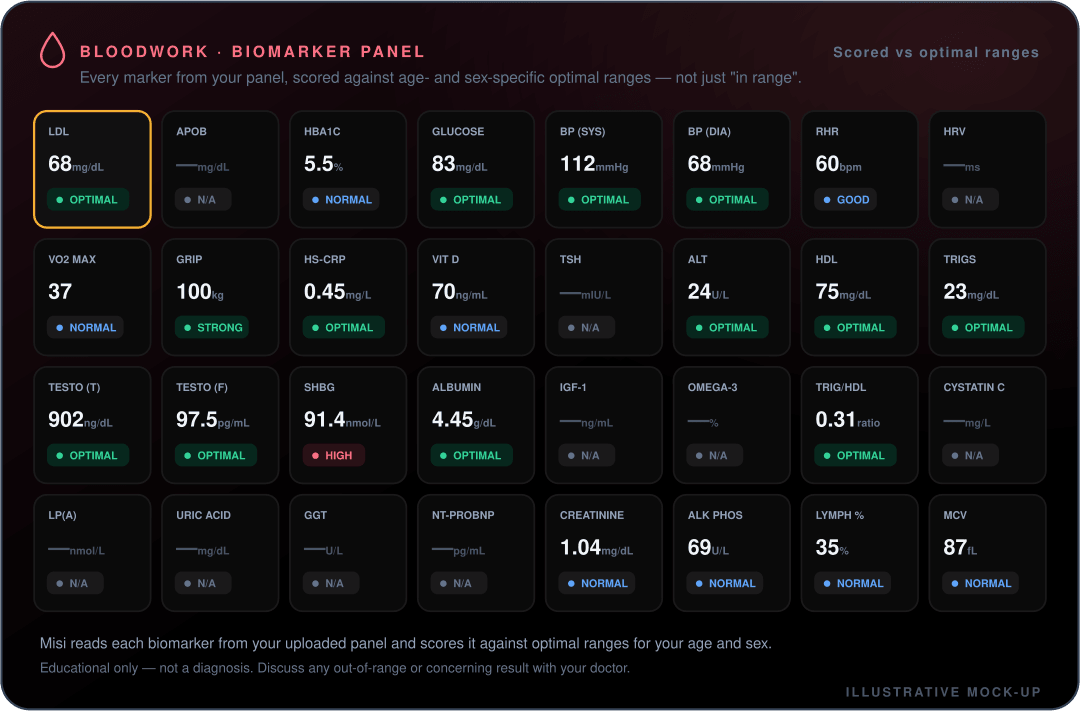
The metabolic wins are well documented. Fasting glucose and HbA1c fall as insulin sensitivity improves — that is the drug’s original purpose in type 2 diabetes. Triglycerides typically drop, blood pressure eases, and markers of inflammation such as hs-CRP tend to come down with the fat loss. In the SELECT trial (Lincoff 2023, New England Journal of Medicine), semaglutide reduced major cardiovascular events in overweight adults without diabetes — evidence that these blood-level changes translate into hard outcomes. Liver markers (ALT) and fatty-liver indices often improve too, as visceral and hepatic fat come down.
What to keep an eye on
A few markers warrant watching rather than celebrating. Rapid weight loss with reduced food intake can lower micronutrient status, so it is worth confirming that iron, vitamin B12, vitamin D and electrolytes stay in range. Dehydration from nausea or vomiting — common early side effects — can transiently push creatinine up and eGFR down, which looks like reduced kidney function but usually resolves with fluids. And because appetite suppression can quietly cut protein intake, the muscle you are trying to keep is at risk even when the panel looks clean.
The marker the scale can’t show you
Weight loss is not automatically health gain. If lean mass is falling fast, some metabolic markers can still look fine while your longer-term trajectory worsens. This is why body composition belongs in the same conversation as the blood panel: HbA1c trending down is only unambiguously good news when it is not being bought with lost muscle. Reading the panel and the composition together is what separates fat loss from mere weight loss.
How Misi reads the panel in context
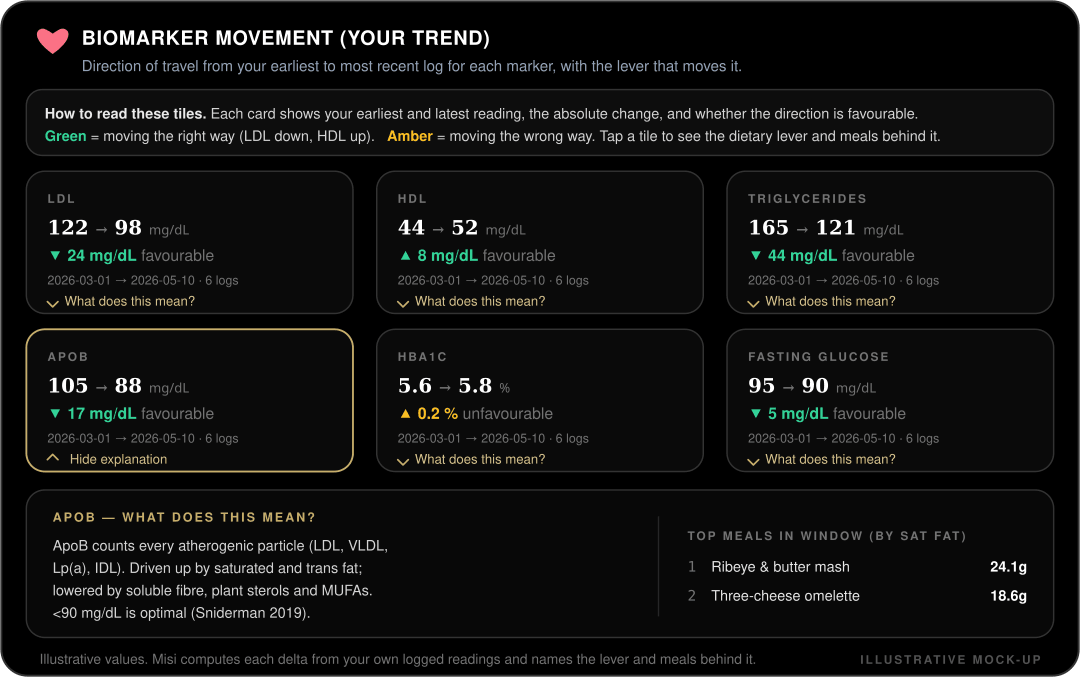
Because Misi parses your labs automatically and tracks them over time alongside your habits, protein intake, training volume and body-composition trend, it reads each marker in context rather than in isolation. A creatinine bump during a week of nausea reads differently from a sustained rise; an improving HbA1c reads differently when protein and muscle are being held versus falling away. That context is exactly what turns a page of numbers into a decision about whether your GLP-1 plan is working.
A GLP-1 changes your blood chemistry, not just your weight. Read the panel — and read it alongside your muscle — and you know whether the drug is buying you health or just a smaller number.
This is general educational information, not medical advice or a diagnostic tool. Optimal ranges are population guides, not personal targets. Your prescriber should interpret your labs in the context of your full clinical picture and your GLP-1 treatment — particularly any marker outside its reference range.
Ready to put this into practice?
Misi BioLabs turns your bloods into a meal plan, training block and AI coaching — in one place.
Start freeFree tools
- PhenoAge Calculator — Biological age from a standard blood panel (Levine 2018).
- Biological Age Calculator — How fast are you really ageing? Nine blood markers answer it — no quiz.
- VO2max Calculator — Cooper 12-minute test → VO2max + fitness age + mortality hazard.