3 min readBlood Biomarkers
High triglycerides: the 6 swaps with the strongest evidence
Triglycerides respond to diet faster and harder than almost any other lipid marker. Here are the six changes with the best evidence behind them — and how quickly they work.
Part 5 of 26This article is part of the Blood Biomarkers guideOf all the numbers on a lipid panel, triglycerides are the most diet-sensitive — and often the most ignored. Unlike LDL, which shifts slowly, triglycerides can move substantially within weeks of changing what you eat and drink. If yours came back high (150 mg/dL or above, or 1.7 mmol/L), the good news is that the levers are unusually responsive. Here are the six with the strongest evidence.
Swap 1: cut added sugar and sugary drinks
Fructose and refined sugar are converted to triglycerides in the liver, so sugar-sweetened drinks are one of the most direct drivers of a high reading. Cutting them is often the single biggest win — and it works fast, sometimes within a couple of weeks. This is the first place to look before anything else.
Swap 2: reduce refined starch and alcohol
White bread, white rice and other rapidly-digested starches feed the same hepatic pathway as sugar. Alcohol is a potent, under-appreciated trigger — the liver prioritises clearing it and makes triglycerides in the process, so even moderate drinking can keep the number stubbornly high. For some people, cutting alcohol alone normalises the reading.
Swap 3: add oily fish and omega-3s
Omega-3 fatty acids (EPA and DHA) lower triglycerides in a dose-dependent way — the effect is one of the best-established in lipidology (Skulas-Ray 2019, AHA scientific statement). Two to three portions of oily fish a week (salmon, mackerel, sardines) is the food-first route; higher medicinal doses are a conversation for your doctor.
Swap 4: replace refined carbs with fibre and wholegrains
Shifting from refined to high-fibre, wholegrain carbohydrates slows glucose absorption and reduces the substrate for triglyceride production. This is the constructive other half of Swaps 1 and 2 — you are not just removing the driver, you are replacing it with something protective.
Swap 5: lose modest weight and move more
Even a 5 to 10% reduction in body weight can lower triglycerides substantially, and regular aerobic exercise improves how efficiently your body clears fat from the blood. These two compound with the dietary swaps rather than replacing them.
Swap 6: choose unsaturated fats over trans and excess saturated fat
Replacing trans fats and some saturated fat with mono- and polyunsaturated sources — olive oil, avocado, nuts — supports a healthier overall lipid profile while you bring triglycerides down, so you are not fixing one marker at the expense of another.
How Misi puts the swaps to work
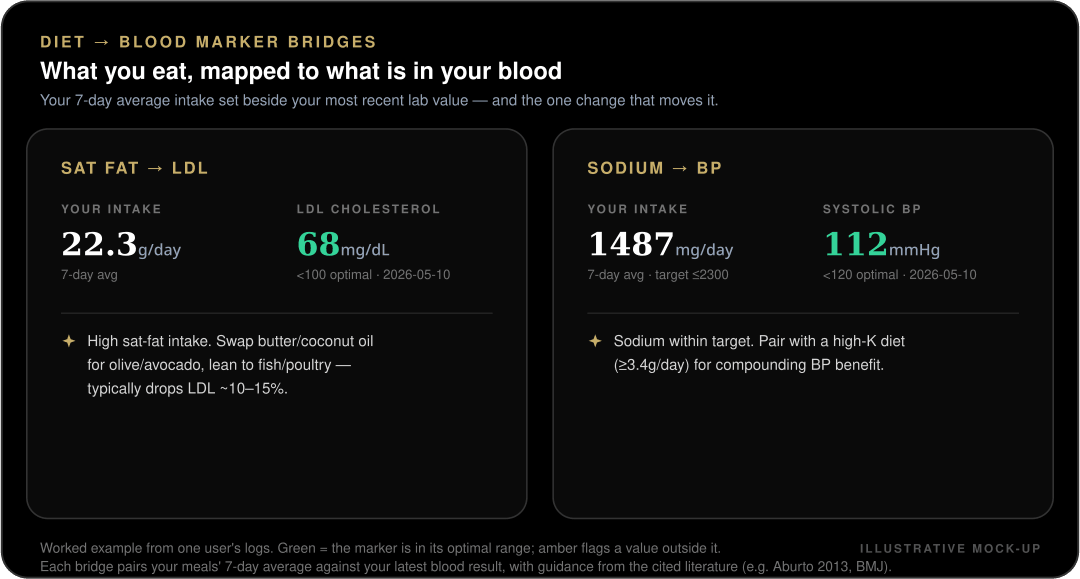
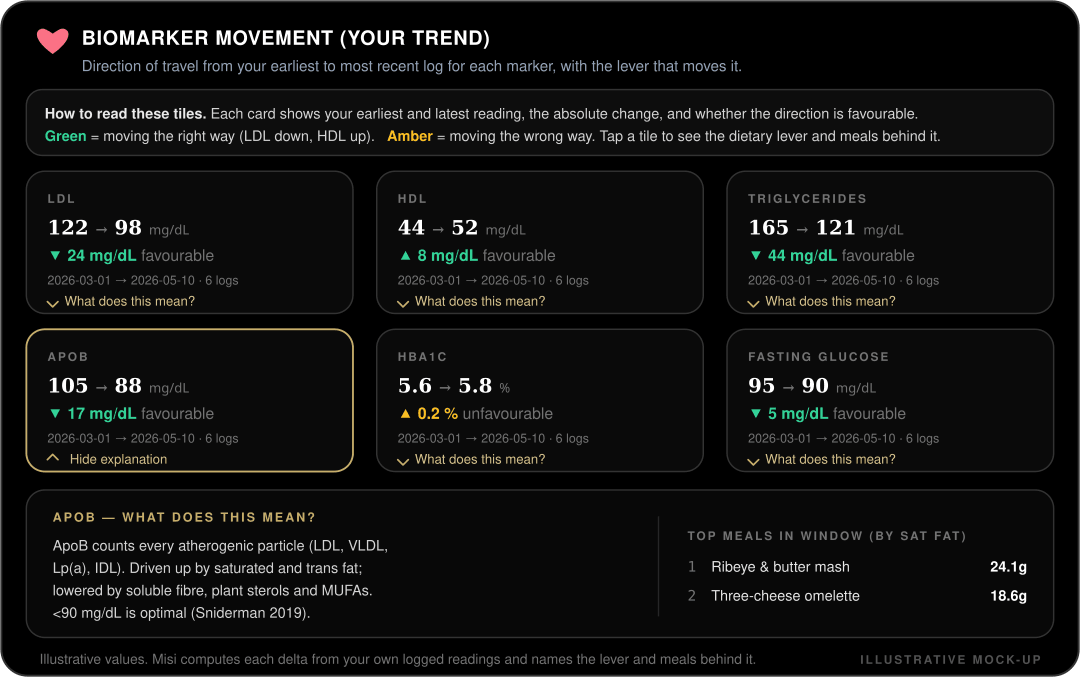
Misi reads your triglycerides from your panel and builds the bridge to the inputs that drive them — flagging added sugar, refined starch and alcohol, tracking omega-3 and fibre intake, and scaling whole-food meals that hit the targets. Because triglycerides move fast, the trend panel often shows the payoff within the first retest — which makes it one of the most motivating markers to work on.
Triglycerides are the lipid marker that rewards you quickest. Cut the sugar and alcohol, add the fish and fibre, and the number often falls before your next appointment.
This is general educational information, not medical advice. Very high triglycerides (above 500 mg/dL / 5.6 mmol/L) carry a risk of pancreatitis and need prompt medical attention. Discuss your results and any changes with your doctor, particularly if you take lipid-lowering medication.
Ready to put this into practice?
Misi BioLabs turns your bloods into a meal plan, training block and AI coaching — in one place.
Start freeFree tools
- PhenoAge Calculator — Biological age from a standard blood panel (Levine 2018).
- Biological Age Calculator — How fast are you really ageing? Nine blood markers answer it — no quiz.
- VO2max Calculator — Cooper 12-minute test → VO2max + fitness age + mortality hazard.